
Mario Collazo Ballesteros
6 months ago
★★★★★
Great team — skilled, attentive, friendly and very accommodating. Workable results quickly. Highly recommend!

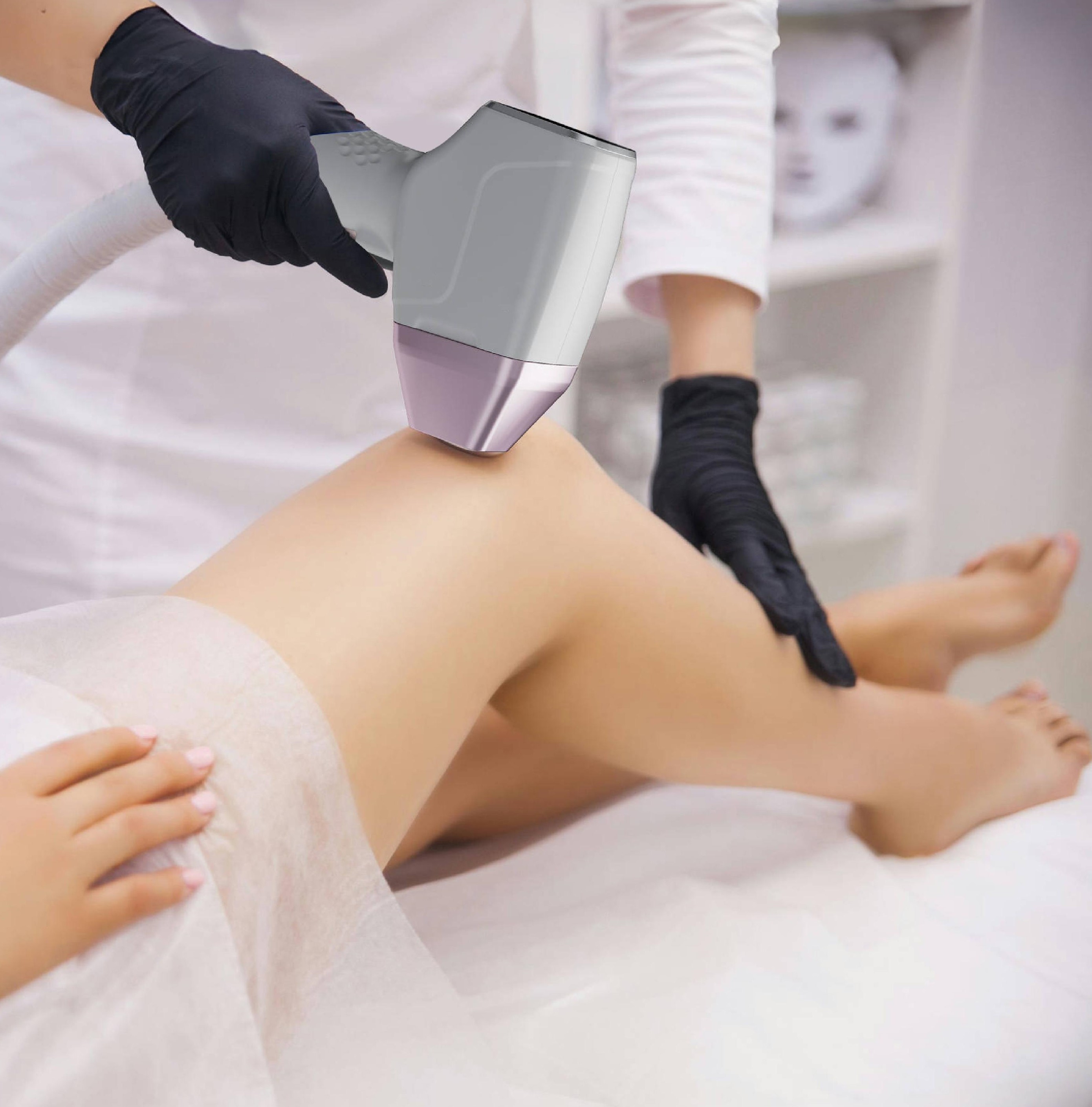
The diode laser targets the hair follicle directly to lastingly stop regrowth. The laser energy is absorbed by the melanin in the hair and turned into heat, acting precisely at the root.
The technology adapts the treatment to your skin type, hair type and treatment area, for women and men alike.

How it works
The laser emits light energy that is absorbed by the melanin in the hair, converted into heat and carried to the follicle to progressively prevent regrowth.
The melanin in the hair absorbs the light energy.
The heat acts at the root of the hair, where regrowth begins.
Only hairs in the growth (anagen) phase respond: several spaced sessions target each follicle at the right moment.

Our technology
The beam reaches down to the hair bulb to damage it lastingly, while a powerful cooling system protects the skin surface. The result: fast sessions, on all skin types, virtually painless.
Before we start, an assessment evaluates your skin, your hair and the areas to treat, checks for any contraindications and defines a suitable protocol.
Before each session the area is shaved as advised. The skin must be clean, with no cream, oil, deodorant, perfume or make-up. Hair must not be pulled out with wax, tweezers or an epilator between sessions.
After checking the skin, the laser settings are adapted to your skin type, hair type and treatment area. Protective goggles are worn throughout, then the laser is applied gradually over the area.
Redness or a feeling of warmth may appear temporarily. The treated hairs then shed progressively over the following days or weeks. Aftercare and sun-protection advice is given after the session.
Laser hair removal can treat most areas of the face and body, for women and men alike. The protocol is adapted to each area depending on hair density, thickness and pigmentation.
Face, underarms, arms, bikini, legs, back, chest or abdomen: several areas can also be combined in a single session.
Some sensitive areas, or areas with tattoos, skin lesions or moles, require particular care and may be worked around during the treatment.
Expected results
Laser hair removal works gradually over the sessions. Hair density decreases as the successive hair cycles are targeted, until a lasting reduction is achieved.
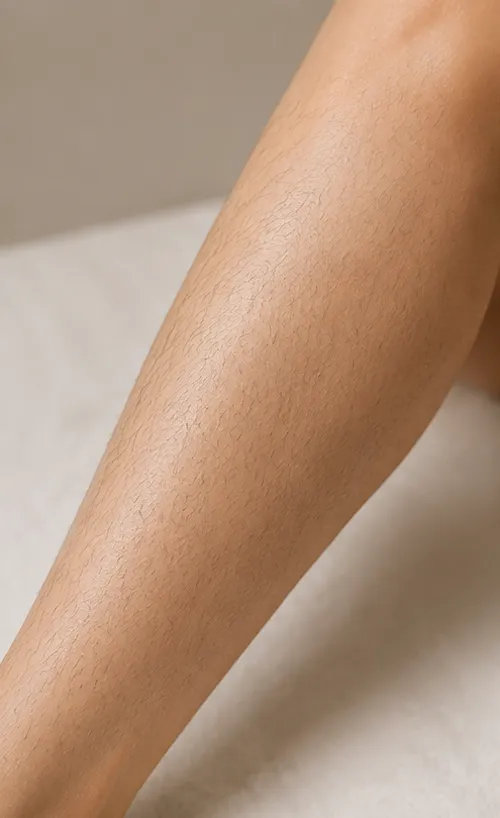
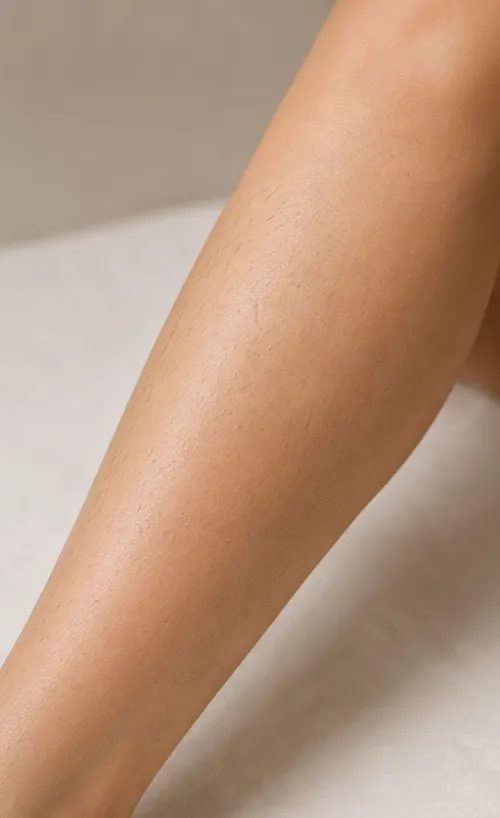
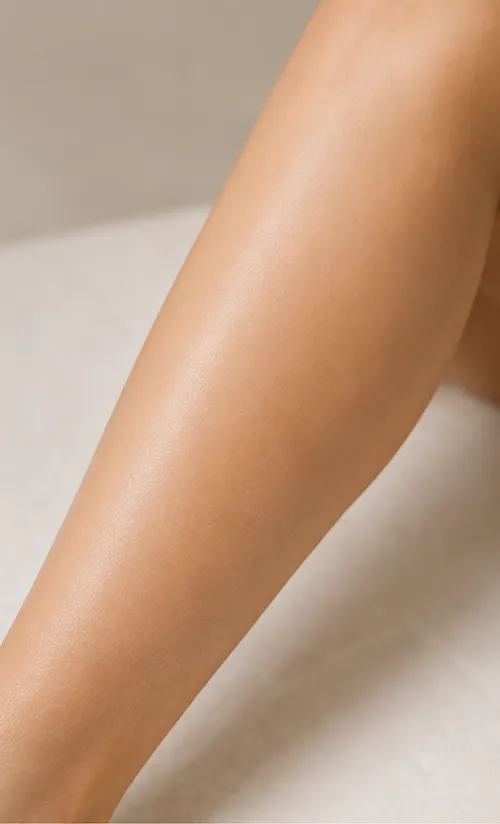
Combine several areas and automatically enjoy a better rate.
| Area | Price |
|---|---|
| Eyebrows | 39 CHF |
| Eyebrow shaping | 49 CHF |
| Chin | 39 CHF |
| Upper lip | 39 CHF |
| Between eyebrows | 39 CHF |
| Temples | 39 CHF |
| Ears | 49 CHF |
| Sideburns | 39 CHF |
| Nostrils | 29 CHF |
| Nose | 39 CHF |
| Cheeks | 59 CHF |
| Beard & lower face | 99 CHF |
| Full face | 159 CHF |
| Area | Price |
|---|---|
| Areolas | 39 CHF |
| Abdominal line | 39 CHF |
| Neck | 59 CHF |
| Abdomen | 119 CHF |
| Area | Price |
|---|---|
| Nape | 59 CHF |
| Upper back | 129 CHF |
| Lower back | 129 CHF |
| Full back | 189 CHF |
| Area | Price |
|---|---|
| Fingers | 39 CHF |
| Full hands | 69 CHF |
| Underarms | 69 CHF |
| Shoulders | 69 CHF |
| Half arms | 109 CHF |
| Full arms | 169 CHF |
| Area | Price |
|---|---|
| Labia | 39 CHF |
| Bikini line (upper thigh) | 39 CHF |
| Intergluteal | 39 CHF |
| Pubis | 59 CHF |
| Full Brazilian | 149 CHF |
| Area | Price |
|---|---|
| Toes | 39 CHF |
| Full feet | 69 CHF |
| Knees | 69 CHF |
| Front of legs | 99 CHF |
| Buttocks | 129 CHF |
| Half legs | 149 CHF |
| Full legs | 229 CHF |
| Area | Price |
|---|---|
| Eyebrow shaping | 49 CHF |
| Mouth & beard outline | 39 CHF |
| Moustache line | 39 CHF |
| Between eyebrows | 39 CHF |
| Temples | 39 CHF |
| Ears | 49 CHF |
| Nostrils | 29 CHF |
| Nose | 39 CHF |
| Cheeks | 69 CHF |
| Beard outline | 99 CHF |
| Full face outline | 159 CHF |
| Area | Price |
|---|---|
| Areolas | 39 CHF |
| Abdominal line | 39 CHF |
| Neck & beard line | 69 CHF |
| Chest | 129 CHF |
| Abdomen | 119 CHF |
| Area | Price |
|---|---|
| Nape | 59 CHF |
| Upper back | 139 CHF |
| Lower back | 129 CHF |
| Full back | 199 CHF |
| Area | Price |
|---|---|
| Fingers | 39 CHF |
| Full hands | 69 CHF |
| Underarms | 69 CHF |
| Shoulders | 79 CHF |
| Half arms | 109 CHF |
| Full arms | 169 CHF |
| Area | Price |
|---|---|
| Bikini line (upper thigh) | 49 CHF |
| Intergluteal | 49 CHF |
| Pubis | 69 CHF |
| Area | Price |
|---|---|
| Toes | 39 CHF |
| Full feet | 69 CHF |
| Knees | 69 CHF |
| Front of legs | 99 CHF |
| Buttocks | 149 CHF |
| Half legs | 149 CHF |
| Full legs | 229 CHF |
Students under 26: −10% from 2 areas, on presentation of proof. Not combinable with promotions or the multi-zone offer.
Great team — skilled, attentive, friendly and very accommodating. Workable results quickly. Highly recommend!

Back hair removal at my 7th session. Almost at the end of my treatment. Very good results.

6th session for underarms. The results are already very good. I may do a few touch-ups.

Very happy with my full-back laser hair removal. Results visible quickly and very fair prices.
Yes. Laser hair removal delivers a significant, lasting reduction in hair by targeting the follicles responsible for regrowth directly.
Over the sessions, treated hairs gradually disappear and regrowth becomes less and less noticeable. Results vary depending on the area, hair type, skin and hormonal factors.
The treatment also limits the problems linked to traditional hair-removal methods, in particular ingrown hairs and repeated irritation.
Laser hair removal targets the melanin in the hair. The light energy emitted by the laser is absorbed by the pigment and turned into heat, damaging the follicle responsible for regrowth while sparing the surrounding skin.
The laser is most effective when the hair is in its growth (anagen) phase. As not all hairs are in this phase at the same time, several spaced sessions are needed to progressively treat the active follicles and achieve a lasting reduction.
For best results the area must be shaved before the session, following the advice given during your assessment.
The number of sessions varies with the treated area, skin type, hair density and type, and certain hormonal factors.
On average a protocol involves 6 to 10 sessions for a lasting reduction. Some areas may need more, particularly the face, which is more sensitive to hormonal changes.
Sessions are spaced to follow the natural hair-growth cycle and treat the follicles progressively when they are most responsive to the laser.
Results can vary from one person to another. They depend in particular on hair colour and thickness, skin type, the treated area, the hair cycle and certain hormonal factors.
Regular sessions, following the advice given and adapting the laser settings to each person also play an important part in how effective the treatment is.
Laser hair removal gives a significant, lasting reduction in hair. However, hormonal or physiological changes can cause new hairs to appear over a lifetime. Occasional maintenance sessions can then be carried out if needed.
The diode laser and the Alexandrite laser are two laser technologies used for lasting hair removal. They target the melanin in the hair to carry energy to the follicle and progressively prevent regrowth.
The diode laser uses a wavelength that penetrates deep into the follicle and can be used on a wide range of skin types when the settings are correctly adapted. Its cooling system also improves comfort during sessions.
The Alexandrite laser uses a different wavelength, particularly well absorbed by melanin. It performs well on pigmented hair and light skin types, but requires more caution when the skin is darker or tanned.
Intense pulsed light (IPL) is not a laser: it emits a broader, less targeted spectrum of light. Its operation and performance therefore differ from those of a true laser device.
The choice of technology and settings must always be adapted to the skin type, hair type and treated area.
The medical diode laser uses a wavelength that effectively targets the melanin in the hair and carries energy to the follicle. Its settings can be adjusted to the skin type, hair density and treated area, allowing personalised care on a wide range of skin types.
The technology also pairs the laser with a powerful cooling system in the handpiece, which protects the skin surface and considerably improves comfort during treatment.
This combination of power, precision and cooling makes it possible to carry out fast, comfortable sessions while keeping the treatment highly effective on the follicle.
Before starting, a preliminary assessment evaluates the skin, the hair, any contraindications and current medication. The laser settings are then adapted to the skin type and the area to treat.
On the day of the session, the area must be shaved beforehand and the skin clean, with no cream, deodorant, perfume or make-up. The laser is then applied gradually over the whole area.
At the end of the session, aftercare instructions are explained to protect the skin and support the rest of the protocol.
The length of a session depends on the treated area and the number of areas selected. Small areas naturally take less time than larger areas or treatments combining several parts of the body.
To find out the duration for your treatment, you can check the times shown when booking online or ask for a personalised quote for a combination of several areas.
The interval between two sessions depends on the treated area and the hair-growth cycle. In general, sessions are spaced several weeks apart to let new hairs enter the growth phase, during which the laser is most effective.
As treatment progresses, regrowth slows and the interval between sessions can gradually be lengthened. The pace is therefore adapted individually to how the hair evolves.
After the initial protocol, a maintenance session can be carried out if regrowth appears, as needed.
After a session, the hairs whose follicles were effectively targeted gradually loosen and fall out over the following days or weeks. This shedding can sometimes give the impression that hair is still growing before it clears naturally.
The laser mainly acts on hairs in the active growth (anagen) phase. As not all hairs are in this phase at the same time, several sessions are needed to progressively treat all the hair.
Over the sessions, regrowth decreases progressively until a significant, lasting reduction is achieved.
Before the session:
Avoid sun exposure and tanning of the area to be treated.
Do not use self-tanner before the session.
Do not pull out hairs with wax, tweezers or an electric epilator in the weeks before treatment.
Shave the area as advised before the appointment.
On the day of the session, the skin must be clean and free of cream, oil, deodorant, perfume or make-up.
Report any medication or change in your health.
Between sessions:
Do not pull out hairs with wax, tweezers or an electric epilator, to preserve the targeted follicle for the next sessions.
Shaving is still possible between appointments.
Avoid sun exposure of the treated area and use SPF 50+ sun protection when it is exposed.
Wait for enough regrowth before the next session.
After a laser hair removal session, temporary skin reactions can appear. The most common are redness, a slight feeling of warmth, swelling around the follicles or skin sensitivity. They usually clear on their own within a few hours to a few days.
More rarely, burns, crusting or temporary changes in pigmentation can occur, particularly in the case of sun exposure, tanned skin or unsuitable settings.
Following the precautions before and after the session, and adapting the laser settings to the skin type and treated area, help limit these risks.
Some situations may require a session to be postponed or adapted:
Pregnancy
Recently tanned skin or significant sun exposure
Recent application of self-tanner on the area to treat
Use of certain photosensitising medication
Infection, active herpes, wound or significant irritation on the area
Certain diseases or skin conditions
Medication incompatible with the laser
White, grey or very light hair, low in melanin, responds little or not at all to laser treatment.
A preliminary assessment checks for contraindications before starting treatment.
Laser hair removal can be carried out on most areas of the face and body. Some areas nevertheless need to be avoided or protected during treatment:
The eyes, eyelids and areas too close to the eyes, in particular certain parts of the eyebrows.
Tattoos, which must not be exposed directly to the laser.
Moles, which are protected or worked around during the session.
Mucous membranes and certain internal genital areas.
Areas with a lesion, infection, significant irritation or a suspicious skin change.
The areas that can be treated are assessed before the session so the treatment can be adapted safely.
Yes. Laser hair removal can also be used to reduce hair density without aiming for complete removal.
This approach can be chosen for the chest, beard, bikini or other areas when the goal is simply less dense, more even hair.
The protocol is then adapted to the desired result and how the hair evolves over the sessions.
Treating fine vellus hair is generally not advised. Very fine, lightly pigmented hairs contain little melanin and therefore respond less well to the laser.
On some areas, particularly the face, treating fine hair can also cause paradoxical hair stimulation, with thicker or more numerous hairs appearing.
A preliminary assessment determines whether the hair present can be treated effectively and safely with the laser.
The effectiveness of laser hair removal depends on the amount of melanin in the hair, as it is this pigment that absorbs the laser energy.
White and grey hair, which has no melanin, cannot be treated effectively with the laser. Very light blond hair and some red hair, which contain little or a different type of melanin, generally respond less well.
For hair that cannot be targeted effectively by the laser, electrolysis can be an alternative.
Laser hair removal can be considered for teenagers, but it is generally best for the hair and hormonal development to be sufficiently settled before starting treatment.
During puberty, hormonal changes can encourage new hairs to appear and affect the results.
For minors, a preliminary assessment and the consent of the legal guardian are required before considering treatment.
Yes, laser hair removal can be carried out in the presence of hormonal disorders, particularly when they cause increased hair growth.
However, hormonal changes can encourage new hairs to appear over time and affect the results. The protocol may therefore require more sessions as well as maintenance sessions depending on how the hair evolves.
Medical management of the hormonal disorder may also be recommended alongside when appropriate.
Yes, the presence of moles does not necessarily prevent an area from being treated with the laser. However, the beam must not be applied directly to moles, because of their high concentration of melanin.
They are therefore identified and protected or worked around during the session.
If a mole is unusual, has changed recently or looks suspicious, the area must not be treated until a medical or dermatological opinion has been obtained.
Laser hair removal can be carried out on an area with a scar, but this requires particular care, especially when the scar is recent, pigmented or still healing.
Depending on its appearance and age, the scar may be protected or worked around during the session so it is not exposed directly to the laser.
If a scar is recent, inflamed or looks unusual, treatment of that area will be postponed until healing is complete or after a medical opinion.